
Most people glance at their teeth in the mirror but rarely give their gums a second thought unless something hurts. Yet your gum tissue is often one of the earliest places the body signals that something deeper is wrong, from nutrient deficiencies to chronic disease. Changes in color, texture, or bleeding pattern are not just cosmetic annoyances, they can be early warning signs worth paying attention to. This article breaks down what your gums might be telling you and when it is time to get a professional opinion.
Bleeding Gums and Cardiovascular Risk
Gums that bleed during brushing or flossing are frequently dismissed as a sign of brushing too hard, but persistent bleeding is more often linked to gingivitis, an early stage of gum inflammation caused by bacterial plaque buildup along the gumline. If left unaddressed, this can progress to periodontitis, a more advanced infection that damages the tissue and bone supporting the teeth. Research has repeatedly connected chronic gum inflammation with increased cardiovascular risk. Studies have found that people with periodontitis face a 20 to 50 percent higher risk of heart disease compared to those with healthy gums. The proposed mechanism is twofold: the same bacteria that irritate gum tissue, particularly strains like Porphyromonas gingivalis, can enter the bloodstream through inflamed tissue, and the body’s inflammatory response to chronic gum disease may also promote the buildup of arterial plaque. This does not mean bleeding gums guarantee heart disease, but it does mean the symptom deserves attention rather than a shrug. Bleeding that persists for more than a week, occurs without vigorous brushing, or is accompanied by swollen or receding gums warrants a dental evaluation. Sharing this history with a physician is also worthwhile, especially for those who already carry other cardiovascular risk factors like high blood pressure, high cholesterol, or a family history of heart disease.
Bleeding gums are not just a dental nuisance—researchers have found that the same bacteria responsible for gum inflammation can enter the bloodstream and contribute to arterial plaque buildup. Studies have linked periodontal disease to a roughly 20% higher risk of developing heart disease, making gum health a genuine consideration in cardiovascular care rather than a separate issue entirely. People managing high blood pressure or cholesterol issues should mention gum bleeding to their physician, since the two conditions are increasingly studied together. Chronic inflammation appears to be the common thread, as gum disease keeps the body’s inflammatory response elevated, which can also affect blood vessel function and blood pressure regulation over time. Some cardiologists now ask patients about their dental history during routine visits, recognizing that unresolved gum disease may signal—or worsen—underlying vascular problems. Simple habits like flossing daily, using an antibacterial mouth rinse, and scheduling cleanings every six months can meaningfully reduce this inflammatory burden. Catching gum disease early is also far easier to treat than waiting until it progresses to more advanced stages affecting the bone supporting the teeth. Early-stage gingivitis often responds to improved hygiene and professional cleaning alone, while advanced periodontitis may require deep scaling, medication, or even surgical intervention to control.
- Bleeding that happens with light brushing, not just hard scrubbing — a sign your gums are inflamed enough to react to minimal friction
- Gums that look red or puffy rather than firm and pink, sometimes with a slightly swollen or rolled edge along the gumline
- Bleeding that also shows up during flossing or even while eating firm foods like apples
- A metallic taste in the mouth that shows up frequently, often linked to low-grade bleeding you don’t visibly notice
- Gums that feel tender or sore to the touch, not just when irritated by brushing
- Bleeding that persists for more than a week despite gentler brushing and improved technique
- Bad breath that lingers even after brushing, which can accompany chronic gum inflammation tied to cardiovascular strain
Pale or White Gums and Anemia
Healthy gum tissue is typically a consistent coral pink, so a shift toward pale pink or white can be a signal worth investigating. This paleness often points to reduced blood flow or a lower red blood cell count, both of which are associated with anemia. Iron deficiency anemia in particular can show up in the mouth before it becomes obvious elsewhere in the body, making gum color a surprisingly useful early clue.
Anyone who notices ongoing paleness alongside fatigue, dizziness, or cold hands and feet should consider bloodwork to check iron and vitamin B12 levels. The gums are not a diagnostic tool on their own, but they add another data point that combined with other symptoms can prompt a helpful conversation with a doctor.
Swollen or Puffy Gums and Diabetes
Swollen, tender gums are one of the more common oral signs associated with elevated blood sugar. High glucose levels can weaken the body’s ability to fight off bacteria, which allows plaque to accumulate more easily and irritate the gum line. People with undiagnosed or poorly controlled diabetes often experience more frequent gum infections, slower healing after minor mouth injuries, and a drier mouth overall.
If gum swelling keeps returning despite consistent oral hygiene, it may be worth requesting a blood sugar screening rather than assuming the issue is purely dental. Gum health and blood sugar control tend to move together, so improving one often supports the other.
- Gums that stay puffy even after a professional cleaning
- Frequent small infections or abscesses near the gum line
- Unusually dry mouth alongside gum swelling
- Slow healing of any cuts or sores inside the mouth
Receding Gums and Bone Density Concerns
Gum recession, where the gum line pulls back and exposes more of the tooth root, is sometimes chalked up to aggressive brushing, but it can also reflect changes in bone density. Since the gums sit directly over the jawbone, conditions that weaken bone elsewhere in the body, such as osteoporosis, can also affect the jaw. This connection is particularly relevant for postmenopausal women, who face higher rates of both bone density loss and gum recession.
A dentist checking for recession during a routine visit may notice patterns that suggest bone loss before a person experiences any other symptoms. Sharing information about family history of osteoporosis or recent bone density scans can help a dental provider connect the dots more accurately.
Dark Spots or Discoloration and Nutritional Gaps

Dark or purplish spots on the gums are not always cause for alarm, but new or spreading discoloration should be evaluated rather than ignored. In some cases, this can reflect vitamin deficiencies, particularly low vitamin C or B12, which affect tissue healing and pigmentation. Smokers also tend to develop darker patches on the gums due to melanin changes triggered by tobacco exposure.
Anyone considering cosmetic dental work, including teeth whitening, should have any unusual gum discoloration checked first, since whitening treatments are designed for enamel and are not meant to address soft tissue changes. Getting a clear picture of what is happening with the gums helps avoid masking a symptom that deserves its own attention.
Gum Changes in Children and Early Orthodontic Signals
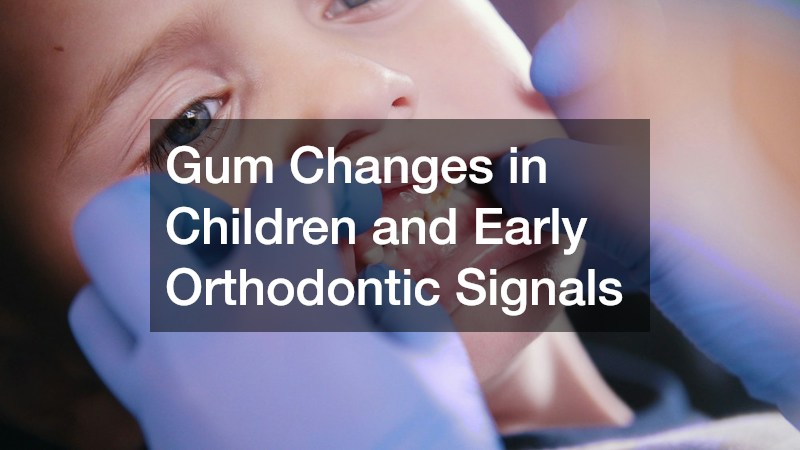
Children’s gums can reveal issues that are easy to overlook amid the busier task of watching teeth come in correctly. Swelling around erupting teeth, uneven gum lines, or gums that bleed easily during brushing can sometimes point to overcrowding, which later becomes relevant when a child needs kids braces to correct alignment. Crowded teeth make cleaning harder, and gum tissue often shows the strain before parents notice anything else.
Regular dental visits during childhood allow professionals to catch these patterns early, sometimes years before orthodontic treatment becomes necessary. Addressing gum irritation caused by crowding early can make the eventual transition to braces smoother and reduce the risk of cavities forming in hard-to-reach spots.
- Gums that bleed only around certain crowded teeth
- Puffiness concentrated in one area of the mouth rather than overall
- Teeth erupting at noticeably uneven angles
- Persistent bad breath in a child despite regular brushing
Knowing When to Schedule a Professional Evaluation
While many gum changes are minor and resolve with better brushing habits, some patterns genuinely warrant a professional look. A visit to the practice becomes especially important when bleeding, swelling, or color changes persist for more than two weeks, since that timeframe usually rules out simple irritation. Professionals have tools like periodontal probing and X-rays that can measure gum pocket depth and bone levels in ways a home mirror check simply cannot.
It is worth remembering that dentists are often the first professionals to notice signs of systemic disease, since patients tend to visit them more regularly than other specialists. Bringing up any unrelated symptoms, such as fatigue or joint pain, during a checkup can help connect patterns that might otherwise go unnoticed for months. This kind of open communication turns a routine cleaning into a genuinely useful health checkpoint.
Your gums are constantly providing feedback about what is happening inside your body, even when nothing seems seriously wrong. Paying attention to color, texture, and bleeding patterns gives you an early opportunity to catch issues ranging from nutrient deficiencies to chronic disease. If you notice any of the changes described above lasting more than a couple of weeks, schedule an evaluation rather than waiting for symptoms to worsen. A simple conversation about your gums today could lead to catching a bigger health issue while it is still easy to manage.